
The Mailer That Made Headlines
Designing a legacy piece and shaping the public conversation it sparked.
State of the City wrap-up mailers don’t usually make the news.
This one did.
After it was released, one of the region’s most prominent columnists publicly questioned the piece and its intent — sparking a conversation in the local media about legacy, public communication, and how a city reflects on its leadership.
Instead of reacting defensively, I treated that moment as an extension of the project itself.
I used emerging tools, including AI analysis, to compare the critique against the documented record of the administration. The response became a second wave of coverage and a rare public dialogue between design, data, and journalism.
The Context
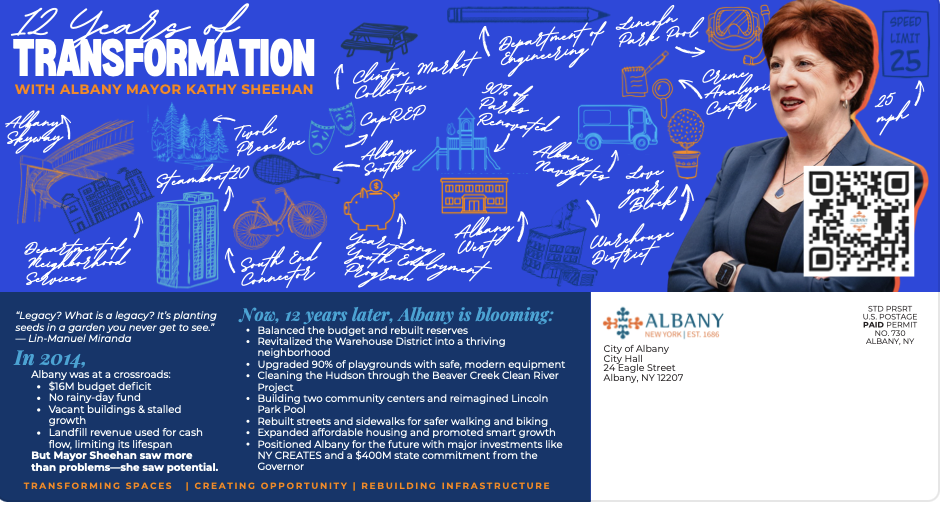
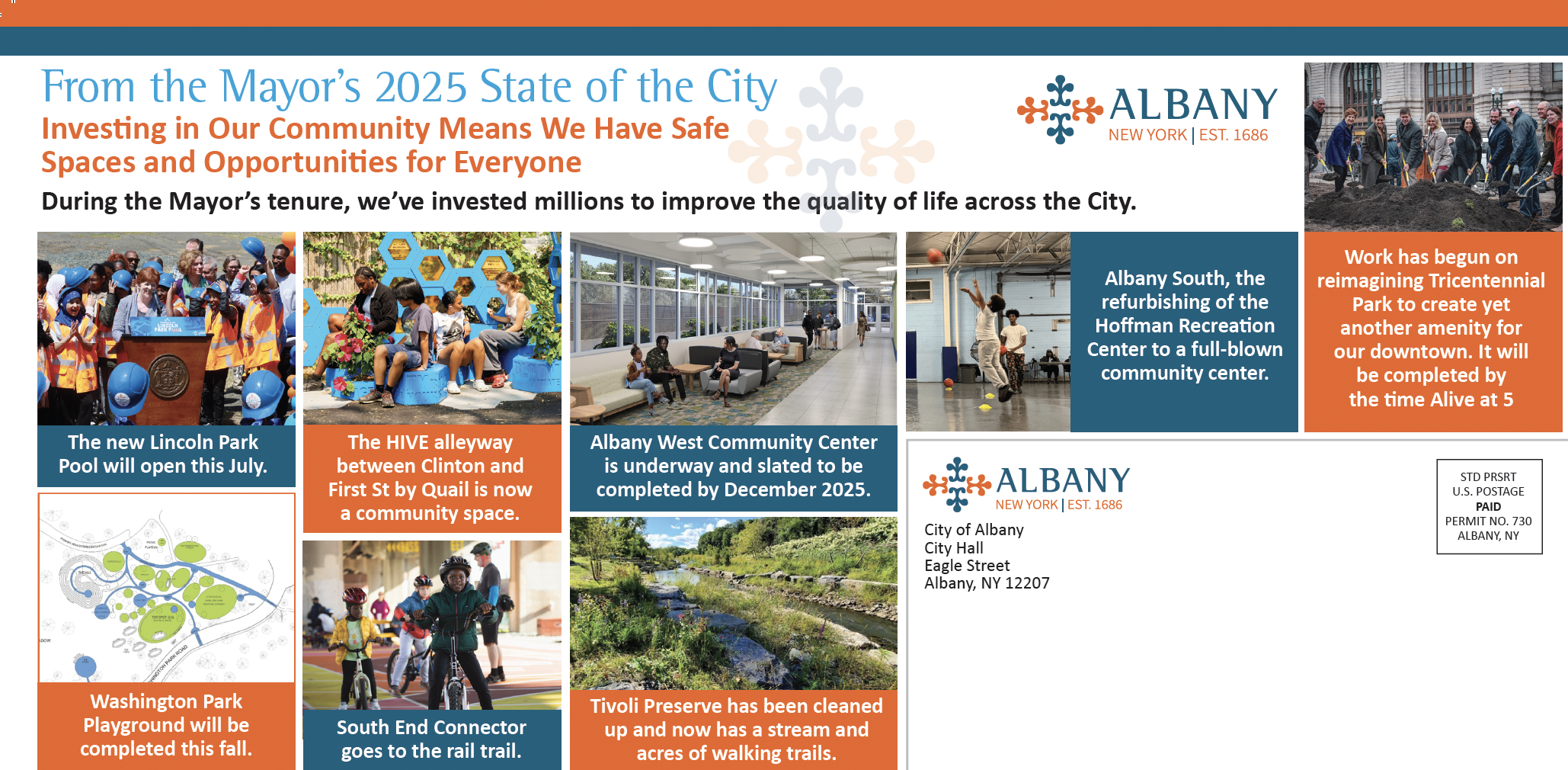
As we wrapped up the Mayor Kathy Sheehan’s final State of the City, a mailer was commissioned to recap her administration’s work.
The first version did not reflect the scale, complexity, or significance of what had been accomplished over twelve years.
Visually, it felt flat.
Conceptually, it felt incomplete.
Historically, it felt insufficient.
I went directly to the Mayor and said it wasn’t legacy-worthy.
She told me to take a stab at it.
From Redesign to Record
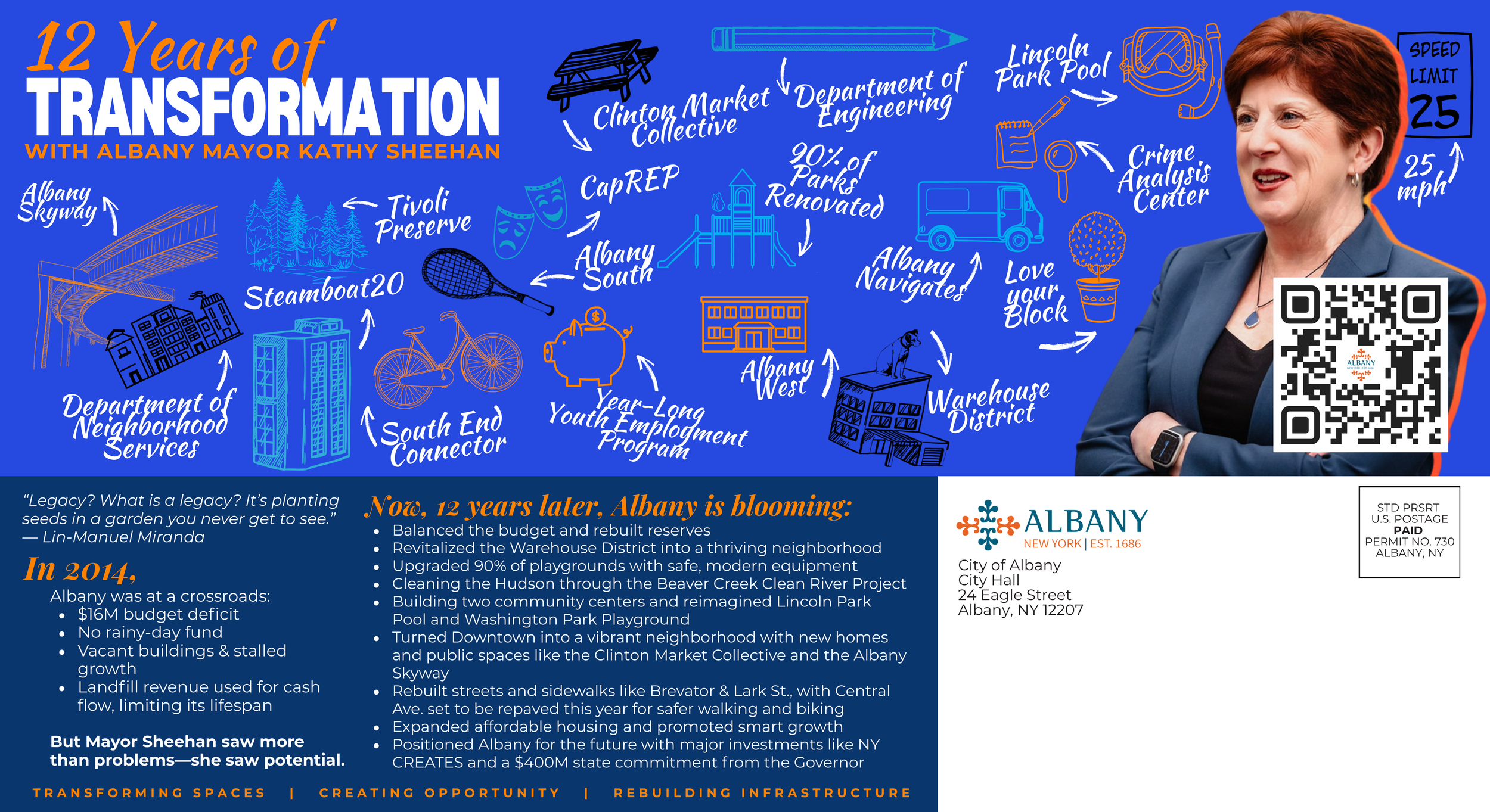
This wasn’t about making it “prettier.” It was about reframing the piece as a historical artifact, something that could exist long after the speech was forgotten, for all residents to see. Rather than listing projects, the mailer created a visual map of change. Each icon and illustration wasn’t decoration; it was a marker in time.
When a critical op-ed followed, the project didn’t end, it expanded. I approached the response the same way I approached the design: with structure, clarity, and intention. I ran the column through ChatGPT using a neutral prompt, asking the system to compare its claims with the documented record of the administration.
That analysis shaped a transparent, fact-based public response. Not one rooted in emotion, but in evidence. Shortly after, a second Times Union article covered the use of AI in that process, turning a mailer into a broader conversation about narrative, truth, and the role of technology in civic communication.
This is still part of the project.
Excerpt from AI-Generated Response
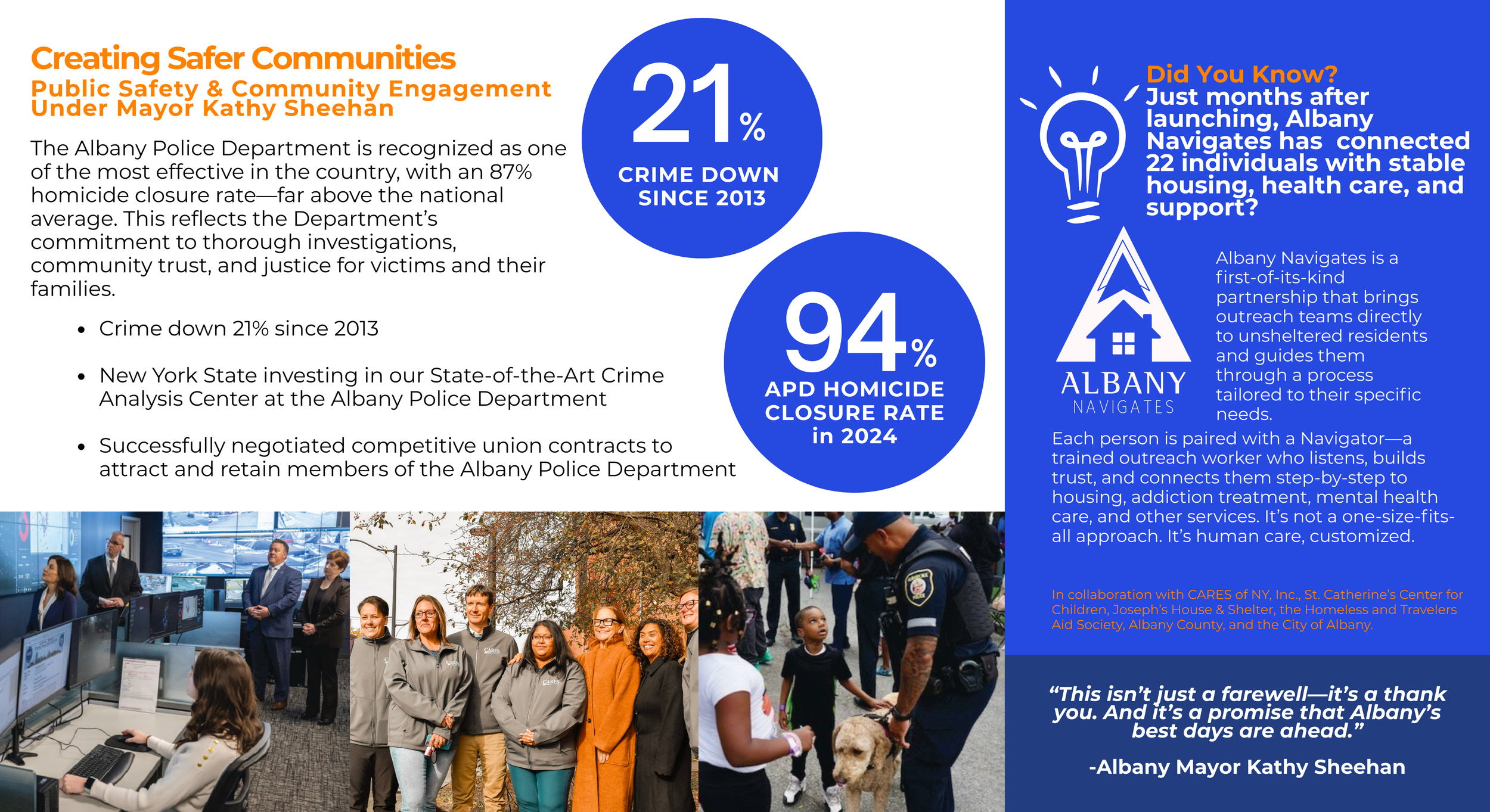
“The mailer is on quicksand when it attempts to praise Sheehan’s record on public safety.”
-Times Union Op Ed
🧠 Tactic: Shifts from mockery to misdirection. The argument: “Homicides are higher now than a decade ago, so crime couldn’t possibly be down.”
📌 Reality: Crime is nuanced. Part I crimes dropped 21% over a 10-year span. The homicide closure rate was 90+% — a testament to improved APD work. The spike in homicides mirrors national trends due to pandemic disruption and gun access, not mayoral policy.
The Public Response — A Timeline
01
The Mailer Was Released
The redesigned State of the City mailer was printed and mailed to residents as a visual record of 12 years of transformation.
02
A Critical Op-Ed Was Published
Shortly after the mailer reached homes, a Times Union columnist published a piece criticizing its intent, tone, and legitimacy.
This moved the project from design into public discourse.
03
I Responded With Structure, Not Emotion
Instead of reacting defensively, I approached the critique as part of the narrative itself.
To understand what was said — and what was missing — I used ChatGPT to analyze the column against the documented record of the administration.
The analysis surfaced:
sarcasm used as framing
context missing from key claims
measurable outcomes contradicting narrative
opinion stated as fact
Read the Coverage
04
A Transparent, Evidence-Based Response Was Issued
Using the findings, I helped craft a clear, accurate response grounded in data and public record — not tone.
This reframed the conversation around:
fiscal recovery
infrastructure
parks
safety trends
housing + neighborhood investment
05
The Story Became News (Again)
The Times Union published a second article — this time about the use of AI in our response.
What began as a mailer had become a public conversation about:
legacy
transparency
civic storytelling
technology and accountability
06
The Mailer Became a Record
By the end, the project was no longer just a printed piece.
It functioned as:
a design artifact
a historical document
a catalyst for public dialogue
a test case for transparency in civic communication
This wasn’t a mailer. It was a timestamp.